


Evidence & Outcomes
Music therapy is an evidence based allied health profession, with research spanning over 75 years. As research methods and our understanding of psychology and neuroscience have improved, so has the evidence base for music therapy to support a variety of functional domains.
Emotional Wellbeing & Mental Health
Music therapy can provide a creative and non-verbal pathway for individuals to explore thoughts and emotions.
Research shows it can support:
- Stress and anxiety reduction
- Emotional expression and regulation
- Mood improvement
- Increased self-esteem and confidence
- Development of healthy coping strategies
Music therapy sessions can provide a safe and structured environment for people to process emotions and experiences through music.
Research reviews have also found that music therapy interventions can reduce symptoms of anxiety and support psychological wellbeing and quality of life.
Communication & Social Connection
Music can provide an alternative form of communication for individuals who experience difficulty with verbal expression.
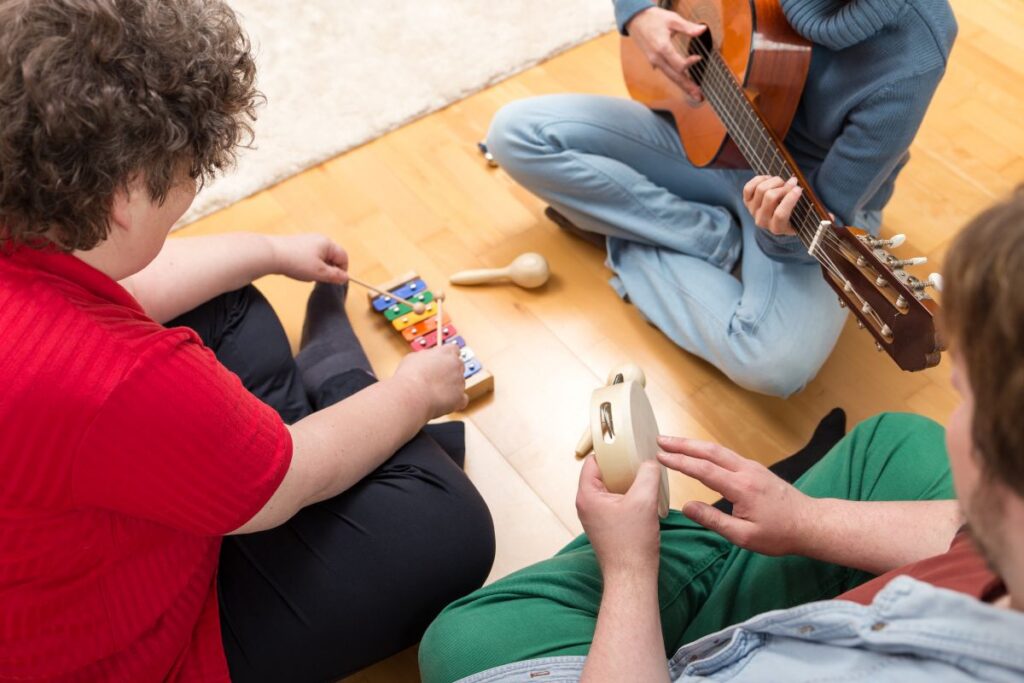
Through shared musical experiences such as singing, improvisation, and group music-making, participants can develop:
- Communication skills
- Social interaction
- Listening and responding skills
- Relationship building
- Confidence in self-expression
For many individuals, music offers a meaningful way to express feelings and connect with others when words are difficult.
Cognitive Development
Music therapy can support cognitive skills by engaging attention, memory, sequencing, and problem solving.
Research and clinical practice show that music-based activities can help support:
- Attention and focus
- Memory and recall
- Learning and cognitive processing
- Executive functioning skills
Music is often used to structure learning activities, reinforce routines, and support cognitive engagement across many therapeutic settings.
Physical & Motor Skills
Music therapy also supports physical engagement and coordination.
Rhythmic activities and instrument playing can help develop:
- Motor planning
- Coordination
- Timing and rhythm
- Movement and physical engagement
Rhythm-based music interventions can even influence physiological responses such as breathing patterns and relaxation, contributing to reduced physical stress and improved calmness.
Sensory Processing & Regulation
Music therapy can support individuals who experience challenges with sensory processing and regulation. Music provides structured sensory input through elements such as rhythm, tempo, volume, and repetition, which can help organise and regulate the nervous system.
Therapists may use activities such as rhythm exercises, movement to music, instrument play, and guided listening to provide multi-sensory experiences that support engagement and regulation.
Music therapy may help individuals develop:
- Improved sensory regulation
- Increased attention and engagement
- Greater body awareness and coordination
- Better tolerance of sensory input
- Strategies for calming or alerting through music
Music can also become a practical tool for self-regulation, with participants and carers learning musical strategies that can be used in everyday routines and environments.
Outcomes Across Different Participant Groups
Music therapy has been shown to support individuals across a wide range of populations and settings.
Registered Music Therapists work with people experiencing:
- Developmental delay and disability
- Autism and neurodiversity
- Mental health challenges
- Acquired brain injury and neurological conditions
- Dementia and ageing-related conditions
- Chronic illness or rehabilitation needs
Research shows that music therapy can improve health outcomes, experiences, and quality of life for people of all ages and abilities.
Music Beat Therapy Services provides therapy programs across many of these areas, including disability support, mental health, early childhood development, aged care, and rehabilitation.
Measuring Progress & Outcomes
Music therapy programs include structured assessment and ongoing evaluation to monitor progress and outcomes.
Therapists use a range of assessment tools and observational measures to track areas such as:
- Engagement in therapy
- Communication and interaction
- Emotional expression
- Functional development
- Therapeutic relationships
Many music therapy outcome measures focus on areas such as communication, interaction, engagement, and overall functioning, particularly for individuals with developmental or learning differences.
These outcomes help therapists evaluate the effectiveness of therapy and adjust treatment plans to best support each participant.
Learn More About Music Therapy
If you would like to learn more about how music therapy can support you or someone you care for, our team would be happy to help.
Music Beat Therapy Services provides therapy programs for children, adults, and older people across a wide range of health and wellbeing needs.
Contact our team to discuss your goals or organise an initial assessment.